

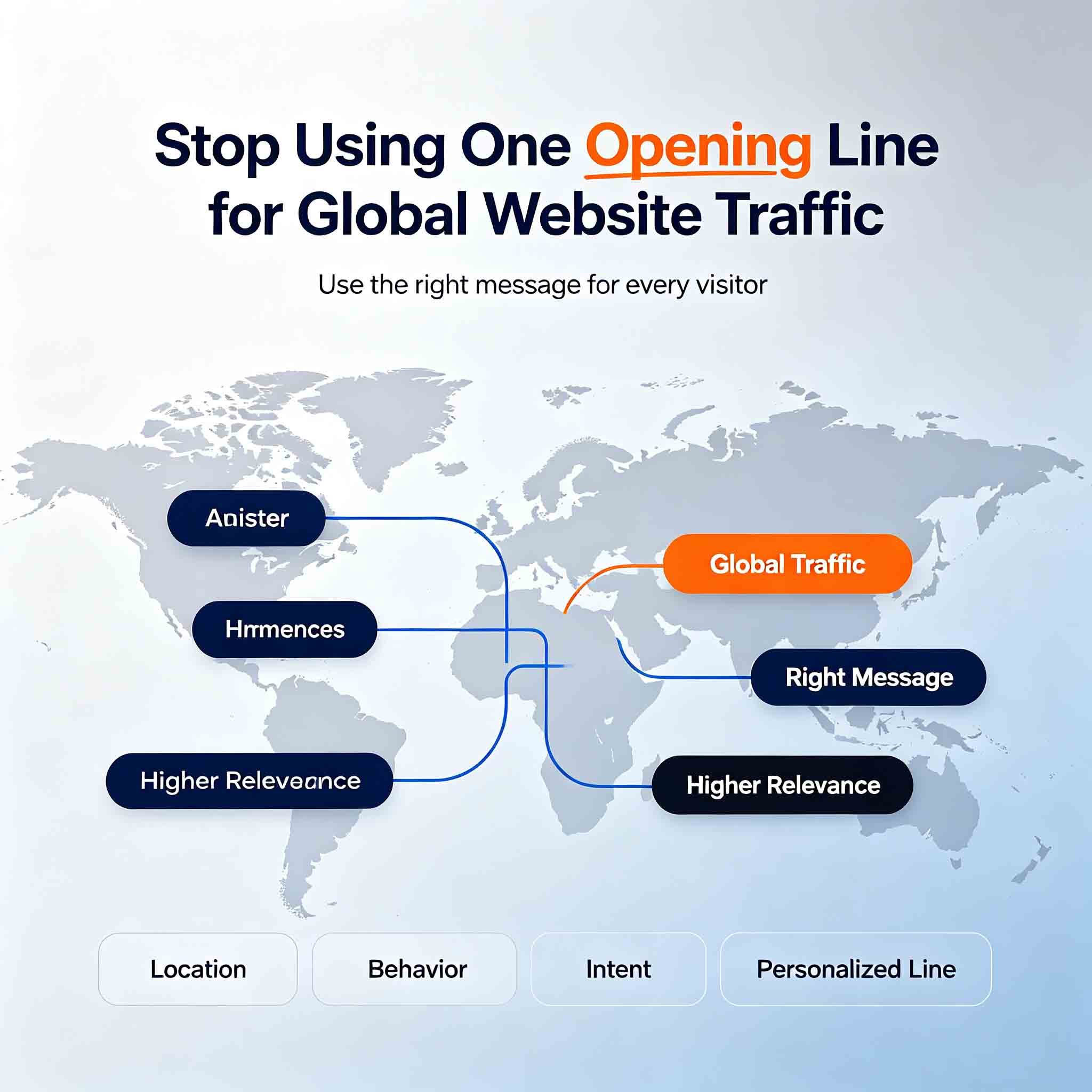
International B2B website traffic rarely acts as a single, uniform audience. Visitors arrive speaking different languages, exploring various product pages, and with diverse objectives—be it conducting research, seeking support, or requesting a quote. When every visitor encounters the same opening line, valuable context is lost precisely when their attention is at its peak. A more effective first impression combines a multilingual greeting with geo-personalized engagement that intelligently reacts to the visitor's subsequent actions, not just their geographic origin.
Why a Multilingual Greeting is More Than Just a Translated Hello
A multilingual greeting isn't merely a decorative feature; it's a crucial first step in keeping an overseas buyer engaged in the conversation. Export-focused websites frequently encounter common pain points: inquiries arrive outside business hours, questions remain unanswered, and potential customers leave before the sales team even has a chance to respond. This leads to missed opportunities and a fragmented customer experience.
An AI chatbot can effectively keep that initial interaction open around the clock. With Italkin, our multilingual real-time chat and automatic language detection make it possible to instantly initiate conversations in the visitor's preferred language, and then continue that dialogue seamlessly without forcing the buyer to switch tools or endure long waits for a reply. This 24/7 availability ensures that no lead is ever left unattended, regardless of time zones.
Geo-Personalized Engagement: Beyond Just Country-Based Signals
Many teams initially approach geo-personalized engagement by simply equating location with language. While geography can be a useful signal, it is rarely enough on its own. A buyer from Germany may prefer English for technical product evaluation. A visitor from the Middle East may be comparing several product lines before deciding whether to contact sales. A repeat visitor from Southeast Asia may already understand your catalog and now be focused on pricing or delivery timelines.
That is why the opening message should evolve from a static greeting into a responsive conversation layer. Instead of relying only on country-based routing, a better system should combine language detection, page-level context, revisit behavior, and conversation intent. This creates a more relevant path for the visitor and reduces the friction that often causes international leads to abandon a session early.
Research on multilingual websites and geo-targeting also supports this broader view. Cultural customization goes beyond direct translation, and region-aware delivery can improve usability when paired with relevant local details such as language and market expectations. At the same time, literature notes that automatic assumptions about a visitor's country or preferred language can be inaccurate, which makes adaptive interaction especially important in B2B environments where the stakes of misunderstanding are higher.
Turning an AI Chatbot into a Qualified B2B Conversation
A useful international website chat flow should not stop at saying hello. It should move the visitor toward a meaningful business outcome. In practice, this means following a conversation path that can be summarized as Train → Understand → Engage → Convert. First, the assistant needs product and business knowledge. Next, it needs to interpret what the visitor is trying to do. Then it should guide the interaction in a helpful way. Finally, it should support lead capture, quote requests, or a smooth handoff to sales.
For B2B teams, this matters because not every visitor is ready for the same next step. Some want documentation. Some want technical clarification. Some want proof of capability. Others are prepared to request a quotation immediately. A multilingual and geo-aware chatbot should recognize these differences and keep the discussion aligned with both the visitor's language and current buying stage.
What the conversation should capture
- Preferred language and communication style
- Pages viewed and product interest area
- Intent, such as research, support, partnership, or quotation
- Basic lead details for follow-up by the sales team
Why Behavior Matters More Than a Generic Welcome
A visitor who lands on a homepage and a visitor who spends several minutes on a product specification page should not receive the same prompt. Behavioral context often reveals more about readiness than geography alone. Time on page, repeat visits, content depth, and page sequence can all help determine whether the best next message is educational, consultative, or conversion-focused.
For example, a first-time visitor on a category page may respond well to a simple multilingual greeting and product navigation help. But a returning visitor viewing shipping terms, certifications, or RFQ-related pages may need a more direct message that invites them to continue the conversation, submit requirements, or connect with a sales specialist.
Practical Value for Global Lead Capture
When multilingual chat and geo-personalized engagement work together, the result is not only a better user experience but also a stronger lead capture process. Instead of collecting unqualified contacts, businesses gain richer visitor profiles that include language preference, product interest, and intent signals. This gives sales teams better context before they ever reply.
It also supports continuity. If a lead arrives outside working hours, the assistant can continue the discussion, answer common questions, and gather preliminary details. That reduces response gaps and helps sales teams start from a more informed position when they take over the conversation later.